
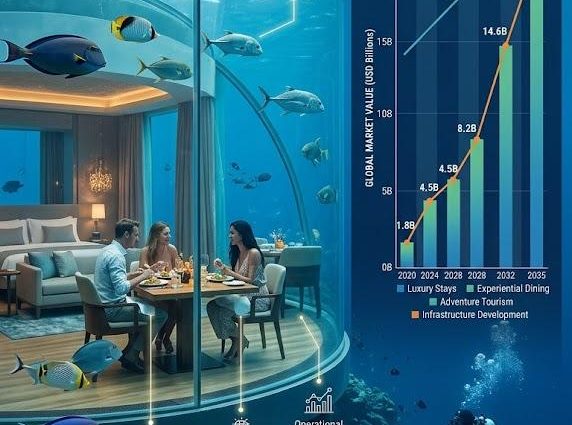
Let’s be honest—when you think of a luxury vacation, you probably picture crystal-clear water, maybe a private villa perched on stilts, or—if you’re really dreaming—a glass-walled bedroom submerged beneath the waves. Well, those fantasies are becoming reality faster than you can say “overwater bungalow.” The hospitality world is diving deep (pun intended) into innovations that blur the line between architecture and nature. And honestly? The future looks… well, wet. In the best way possible.
The Rise of the Overwater Bungalow—But Make It Smarter
Overwater resorts aren’t new. The Maldives basically invented the concept. But today’s versions? They’re a far cry from simple thatched roofs and wooden decks. We’re talking about floating villas that adjust to tidal changes, solar-powered glass floors, and even retractable roofs for stargazing. One resort in French Polynesia, for instance, now offers bungalows with transparent kayaks stored right under the deck. You just… slide in. No lobby, no waiting.
But here’s the real kicker: some overwater suites now use AI to control lighting, temperature, and even the transparency of the glass. Imagine waking up, mumbling “good morning,” and the floor beneath you slowly clears to reveal a manta ray gliding past. That’s not sci-fi. That’s 2024.
Eco-Floating: The Sustainability Angle
Of course, building overwater is tricky—ecologically speaking. Coral reefs don’t appreciate concrete pillars. So innovators are turning to modular, biodegradable materials and floating foundations that don’t touch the seabed. Some resorts in the Caribbean are experimenting with “living” structures covered in coral-friendly coatings. The goal? Zero anchor damage. One concept even uses seawater-cooled air conditioning—a brilliant hack that reduces energy use by up to 40%.
- Floating solar panels integrated into decking
- Rainwater harvesting systems built into thatched roofs
- Underwater drone patrols to monitor reef health
- Biodegradable sunscreens provided in every room
It’s not perfect—nothing ever is—but it’s a start. And honestly, it’s better than the old “build first, ask forgiveness later” approach.
Underwater Suites: Sleeping with the Fishes (Literally)
Now, let’s go deeper. Underwater hotels have been around for a while—think the Conrad Maldives’ Muraka or the Atlantis in Dubai. But the next generation? They’re not just rooms with a view. They’re immersive environments. Picture a submerged lounge with 270-degree acrylic panels, where you sip champagne while a whale shark cruises by. Or a bedroom where the ceiling is a live coral garden, lit by bioluminescent plankton.
One emerging concept is the “submersible villa”—a structure that can slowly descend during your stay. You check in on the surface, then over the next few hours, the entire villa sinks to a depth of 20 meters. No pressure suits, no decompression. Just you, the ocean, and a lot of glass. The engineering challenge is immense—water pressure, seals, emergency protocols—but prototypes are already being tested off the coast of Japan.
Pressure-Proof Design and Safety Innovations
Safety is the elephant in the room—or rather, the shark in the water. Underwater resorts use laminated acrylic panels that can withstand pressures up to 50 meters deep. Each panel is tested to 10 times the expected load. Emergency escape pods, like mini submarines, are being built into some suites. And there’s always a backup oxygen supply—think scuba tanks disguised as furniture.
| Feature | Current Standard | Future Concept |
|---|---|---|
| Viewing angle | 180° (one wall) | 360° (full dome) |
| Depth range | 5–10 meters | 20–30 meters |
| Emergency egress | Watertight hatch | Submersible escape pod |
| Lighting | LED strips | Bioluminescent panels |
It’s a bit like a luxury spaceship—except the void outside is filled with fish, not stars.
Hybrid Concepts: Overwater Meets Underwater
Why choose? Some designers are blending both worlds. Imagine a resort where your living room is above water, but your bedroom is a glass bubble suspended 15 feet below. You take a spiral staircase down through a clear tube—surrounded by water on all sides. One such concept, called “The Spiral,” is being pitched for a site in the Great Barrier Reef. It’s part overwater villa, part underwater observatory.
And then there’s the “floating island” approach. These are self-contained, mobile resorts that can relocate depending on weather or marine life patterns. They’re like cruise ships, but stationary—and way more eco-friendly. Some even have underwater “parking garages” for submersibles. You know, for guests who want to explore the reef without getting wet.
The Role of VR and Augmented Reality
Here’s a curveball: not every resort needs actual water. Some concepts use augmented reality (AR) headsets to simulate underwater environments in land-based rooms. You put on the glasses, and suddenly your hotel room looks like a coral reef. Fish swim past your bed. The ceiling shows the surface above. It sounds gimmicky, but for landlocked locations—or for guests with mobility issues—it’s a game-changer. One resort in Switzerland is already testing this for “underwater” suites in the Alps.
Sure, it’s not the real thing. But it’s close. And it’s a lot cheaper than building an actual underwater wing.
Future Concepts That Sound Like Science Fiction
Okay, let’s get wild. Architects are sketching ideas that make today’s resorts look like beach huts. Here’s a taste:
- Bioluminescent pools – Swimming at night in water that glows when you move. No lights needed. The technology uses dinoflagellates (tiny glowing algae) cultivated in controlled pools.
- Underwater drone butlers – Need a midnight snack? A waterproof drone delivers it to your submerged suite. No human staff required.
- Carbon-negative floating cities – Entire resorts built on algae farms that absorb CO2. The resort actually cleans the air while you sip cocktails.
- Personal submersible “pods” – Like a glass elevator that detaches from your room and lets you drift through the reef. Some prototypes even have a mini bar inside.
Are these feasible? Some are. Some aren’t. But the fact that they’re being discussed means the industry is hungry for change. And that hunger… it’s good for all of us.
Challenges Nobody Talks About (But Should)
Let’s not pretend it’s all smooth sailing. Underwater construction is brutally expensive—a single suite can cost $10 million or more. Maintenance is a nightmare; saltwater corrodes everything. And then there’s the psychological toll—some guests feel claustrophobic or anxious in submerged spaces. Resorts are now hiring marine psychologists to help design layouts that feel open, not oppressive.
Also, hurricanes. Tsunamis. Rising sea levels. You can’t just build a floating villa and forget about it. Future concepts are incorporating dynamic ballast systems that stabilize structures during storms. Some even have “submarine mode”—they can fully submerge to avoid surface waves. That’s not a joke. It’s being tested.
And let’s not forget the ethical dilemma: is it right to build in pristine marine environments? Some argue that these resorts actually protect reefs by drawing tourists away from destructive activities like fishing. Others say it’s just another form of exploitation. The truth probably lies somewhere in the middle—but it’s a conversation worth having.
What This Means for Travelers
For the average person? These innovations aren’t just for billionaires. As technology matures, prices will drop. We’re already seeing “budget” underwater rooms in places like Zanzibar and Thailand—nothing fancy, but still a glass-walled experience. And overwater bungalows are popping up in non-traditional spots like Lake Tahoe and the Florida Keys. The dream is becoming accessible.
So whether you’re a diver, a luxury seeker, or just someone who loves a good sunset over the water… keep an eye on this space. The future of resorts isn’t just on the beach. It’s in the water. And honestly? That’s a future worth waiting for.