
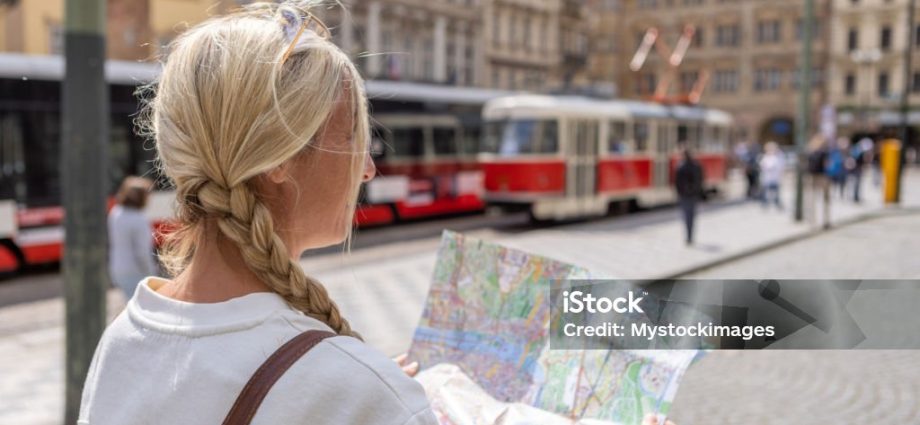
Let’s be honest for a second. When you tell people you’re heading off alone—maybe to Lisbon, maybe to a quiet beach in Thailand—you get the look. The one that says, “Are you sure that’s wise at your age?” And you know what? That look says more about them than it does about you. Women over 50 are the fastest-growing demographic of solo travelers, and for good reason. We’ve earned our confidence, our intuition is sharp, and honestly? We know how to handle ourselves. But safety isn’t about paranoia—it’s about smart preparation. So let’s talk about the real, practical, no-nonsense strategies for staying safe while you’re out there seeing the world. Because the world needs your perspective, and you deserve to see it on your terms.
First Things First: Ditch the Fear, Keep the Awareness
Here’s the deal—fear is a terrible travel companion. It weighs you down, clouds your judgment, and honestly, it ruins the gelato. But awareness? That’s your superpower. You don’t need to walk around expecting danger; you just need to be present. Notice the exits when you walk into a café. Notice who’s paying attention to you—and I mean, really noticing, not just a passing glance. That’s not paranoia; that’s just good situational intelligence. Think of it like driving a car—you’re not constantly expecting a crash, but you’re always scanning the mirrors. Same principle, different scenery.
Your Intuition Is Your Best Safety Gadget
We’ve spent decades being told to be polite. To not make a fuss. To second-guess ourselves. Well, I’m here to tell you—screw that. If a street feels off, turn around. If a taxi driver gives you a weird vibe, get out at the next light. If a hotel room feels wrong, ask for another one. Your gut is not being dramatic; it’s picking up on micro-signals your conscious brain hasn’t processed yet. Trust it. It’s the one piece of safety equipment you can’t buy, and it’s been with you all along.
Packing Smart: Less Stuff, More Sense
You know that old saying about packing your worries? Yeah, don’t do that. But do pack a few things that make safety easier. Here’s the thing—you don’t need a tactical vest or a whistle that could deafen a small dog. You need practical items that blend in.
- A doorstop alarm. Small, cheap, and it slides under any hotel door. If someone tries to enter, it makes a racket. Peace of mind for under $10.
- A portable charger. Your phone is your lifeline. A dead battery is a safety risk, not just an inconvenience.
- A cross-body bag. Not a backpack (too easy to pick) and not a shoulder bag (too easy to snatch). Cross-body, zipped, worn toward the front. Boring? Maybe. Effective? Absolutely.
- A copy of your passport and a few backup photos. Keep the real one in the hotel safe, and carry the copy. Also, email yourself a scan. Future-you will be grateful.
And for heaven’s sake, don’t pack so much that you can’t move quickly if you need to. A rolling suitcase is fine, but you should be able to lift it, carry it, and manage it up a flight of stairs without breaking a sweat. If you can’t, you’ve overpacked.
Choosing Where to Stay (and Where to Avoid)
Location is everything, and I don’t just mean for the Instagram photos. When you’re booking accommodation, look at the neighborhood on a map. Is it well-lit? Are there restaurants and shops nearby? Is it a 15-minute walk from the main square, or a 40-minute trek through a sketchy industrial zone? Sure, the outskirts might be cheaper, but the cost of a taxi every time you go out adds up—and the isolation isn’t worth it.
Also, read the reviews. And I mean read them—don’t just look at the star rating. Look for mentions of “noisy,” “safe,” “helpful staff,” or “felt like home.” A hotel with a 24-hour front desk is a godsend. So is one with an elevator that actually works. You don’t want to be hauling your bag up four flights of stairs at 10 PM. That’s not adventure; that’s a hazard.
The “Check-In” Habit That Works
Here’s a little ritual I’ve adopted: every evening, I send a quick text to a friend or family member back home. Just a simple “Made it back to the hotel. All good.” It takes ten seconds, and it does two things—it gives your people peace of mind, and it creates a daily check-in pattern. If you ever miss a day, they’ll notice. That’s your safety net, and it’s woven from something as simple as a text message.
Navigating the Streets (and the Scams)
Walking around a new city is one of life’s great joys. But it’s also where you’re most vulnerable—not to violence, usually, but to distraction. Pickpockets work in teams. One bumps you, the other grabs your wallet. The classic “spilled coffee” trick. The “look at that bird!” distraction. You’ve heard of them all. The trick is to not be an easy target.
Walk with purpose. Even if you’re lost, don’t look lost. Stop, check your phone, then walk confidently. If someone approaches you with a petition, a map, or a sob story, just smile and say “No, thank you” and keep moving. Don’t stop to chat. Don’t feel guilty. You’re not being rude; you’re being safe.
And here’s a tip that might sound odd—dress like a local, not like a tourist. I’m not saying you need to buy a whole new wardrobe. But leave the fanny pack at home (or wear it under your shirt), skip the bright white sneakers, and don’t walk around with a map unfolded in front of you. Blend in. It’s not about hiding; it’s about not advertising that you’re an easy mark.
Transportation: Getting There Without the Drama
Getting from point A to point B can be the most stressful part of the day. Let’s simplify it. Pre-book your airport transfers whenever possible. A driver waiting with your name on a sign is worth every penny. For taxis, use official apps—Uber, Lyft, or the local equivalent. They have a record of your trip, which is a built-in safety feature. If you must hail a cab on the street, take a photo of the license plate and send it to your friend. It’s a small gesture that says, “I’m aware, and I’m not playing games.”
On trains and buses, sit near the conductor or driver. It’s not just about safety—it’s also about feeling more comfortable. And if you’re taking a night train? Book a sleeper compartment if you can, and lock the door from the inside. That’s a non-negotiable.
When You’re Out at Night
I’m not going to tell you to be back at the hotel by sunset. That’s ridiculous. You’re an adult, and some of the best experiences happen after dark—the jazz bar, the night market, the quiet piazza under the stars. But there’s a smart way to do it.
- Plan your route beforehand. Know which streets are well-lit and busy. Don’t wander aimlessly.
- Keep your drink in sight. Always. If you lose sight of it, order a new one. It’s not worth the risk.
- Don’t wear headphones. I know, I know—music makes the walk nicer. But you need your ears. You need to hear the footsteps behind you, the car slowing down, the sudden change in noise.
- Trust the “closed” feeling. If a street feels empty and dark, cross it off your list. Even if it’s the shorter route.
And here’s a little quirk of mine—I always know where the nearest open hotel is. Any hotel. Not to stay there, but just as a landmark. If I ever feel uneasy, I can walk into the lobby, sit down, and collect myself. No one questions a woman over 50 sitting in a hotel lobby. It’s a quiet sanctuary, and it’s always there.
Health and Medication: The Overlooked Safety Net
Safety isn’t just about crime—it’s about your health, too. And let’s be real, our bodies don’t bounce back like they did at 30. So pack your meds in your carry-on, not your checked luggage. Carry a list of your medications and allergies, translated into the local language if possible. And for heaven’s sake, get travel insurance. I know it feels like a waste of money until you need it. Then it’s the best money you’ve ever spent.
Also, listen to your body. If you need a rest day, take it. If you’re exhausted, you’re not as alert. Being tired is a safety risk in itself. A midday siesta isn’t a luxury; it’s a strategy.
The Loneliness Factor (and Why It’s Actually a Good Thing)
Here’s something nobody tells you about solo travel—you’re never truly alone. You’ll meet people at breakfast, on tours, in line for museums. You’ll have conversations you’d never have if you were with a companion. And you’ll also learn to enjoy your own company, which is a gift that keeps giving. But if you ever do feel lonely, that’s your cue to go somewhere busy. A café, a public square, a park bench. Just be around people. It’s a natural safety buffer, and it’s good for the soul.
Bringing It All Together
Look, I’m not going to pretend that the world is always safe, because it isn’t. But it’s also not the danger zone that some would have you believe. The truth is, you’ve navigated careers, raised families, survived heartbreaks, and probably changed more flat tires than you’d like to admit. You are not fragile. You are not naive. You are a woman with decades of life experience, and that experience is your greatest asset.
So pack your bag, trust your gut, and go. The mountains are waiting. The oceans are calling. The streets of old cities are whispering your name. You’ve spent a lifetime taking care of everyone else—now it’s time to take care of you. And you know what? You’re going to be just fine. In fact, you’re going to be magnificent.
Safe travels, and remember—the world is lucky to have you in it.
[Meta title: Solo Travel Safety for Women Over 50: Smart Tips & Real Advice | Meta Description: Discover practical solo travel safety tips for women over 50. From packing smart to trusting your intuition, learn how to explore the world with